‘Hamish: A Real Thing’
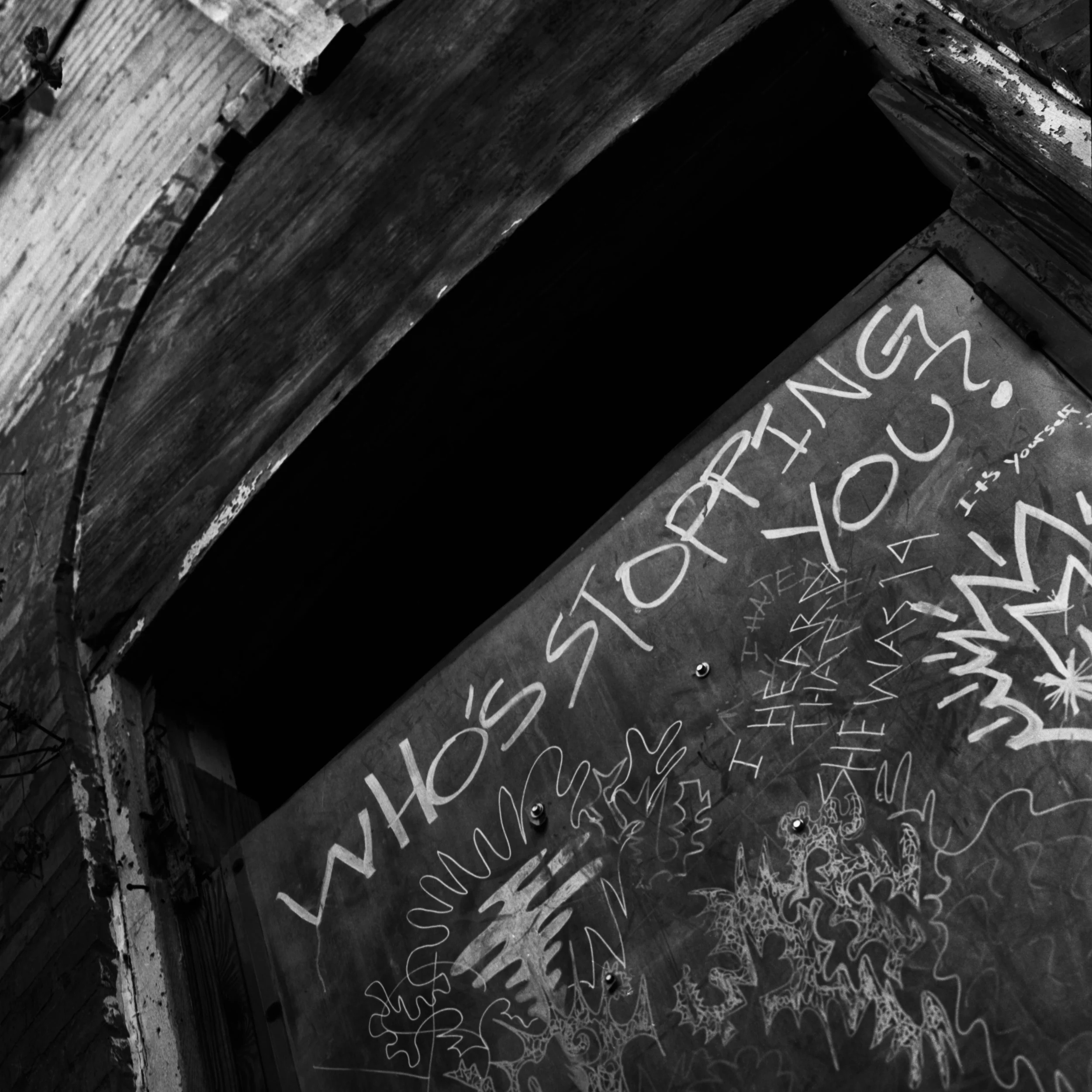
Paxton Hilgendorff is an environmental and contemporary studio artist who recently graduated from Colgate University, focusing on sculpture and photography. Based in Hamilton, New York, his work focuses on the intersections of the natural and artificial worlds, utilizing found objects and abandoned locations in the local and surrounding community. Inspired by growth and decay, Paxton's work aims to question the ability of humans to live within nature, as well as their ability to imitate the natural forms of the world.
Hamish: A Real Thing
There was once upon a time…
“A piece of wood!” my little readers will instantly exclaim.
No, children, you are wrong. There was once upon a time a plague.
It was an ordinary plague; one that destroyed lives and separated families. It took root in the lungs of those with the misfortune of shaking its hand, kissing its cheek, bowing in its direction. It was a very clingy plague. In the lungs, it would fester and stretch, setting up house and causing its vessel to cough and hack and choke an ungrateful amount. When, inevitably, its lodgings were no longer viable, another was always, conveniently available.
And, like many other plagues, this plague had no preference among gender or age and sent many to early graves, where they met Master Antonio, the local cemetery groundskeeper. For the most part, Master Antonio was unbothered by the stench and sight of death. After all, his work was gruntish. He only dealt with the dearly departed who had no funerals or flowers: dig, dump, dig. And with no kin about, he could pretend the corpses weren’t human at all, but rather humanoid creatures that he had to dispose of to protect humanity. He viewed much of his solitude as such: a gatekeeper, lonely because a wife and child should not have to endure the same life.
Only, the plague brought new, disturbing experiences to Master Antonio’s door. When people first began dropping, suddenly and curiously, burials were held in masses. Even those who hadn’t known the corpse before it was a corpse came to oogle. But those gatherings only produced more dead. When they caught on, bodies by the wagonload arrived at the cemetery, accompanied only by the twitchy transporter who never stayed longer than it took him to dump his cargo on the damp ground.
Master Antonio, however, was not as frightful of the plague as everyone else seemed to be. He buried the corpses as his job dictated, the same as usual, only now there was much more work to be done: dig, dump, dig, dig dig dig dump dig. Really, he only became wary of the plague when his shovel began to speak.
“Oh! Oh! This soil is far too cold!” Master Antonio stumbled back, dropping his tool. Even so, the shovel didn’t stop murmuring. “And these bodies too cold, these lungs too shriveled!” The voice was nothing more than a whine, at such a low frequency that not even the tomcat sleeping nearby twitched.
Leaning forward, Master Antonio narrowed his eyes and realized it was not his shovel speaking, but rather the dirt on its blade. No, not the dirt—something smaller, deeper, without a mouth or mind, but undoubtedly alive.
“Who are you?” Master Antonio asked. The cemetery went as silent and still as corpses and shovels and dirt normally are and, for a brief moment, the groundskeeper wondered if he had imagined the voice in the first place. Then, it happened again:
“Oh! Oh! You are quite a warm man, with hearty lungs, and oh! look at that smile! Bend down here, so I can get a closer look.” Master Antonio began to kneel, then pulled back, suspicious.
“No, no, you tell me who you are!” he said.
“Why, I have no name, no mouth or mind.”
“Then what are you?”
“Must I be a thing?” Master Antonio blinked, brows furrowed.
“You must be a thing, otherwise you wouldn’t be alive,” he replied.
“I am alive yet I am not a thing. Oh! Humans! To believe only a thing exists with a vessel to see and touch and hear,” the voice said. “Can I not be a thing without?” Master Antonio pondered this, rubbing his chin.
“Every thing must have a vessel. Even water exists in a container, and the earth holds the air. For a thing to exist, there must be a shape around it,” he decided.
“Oh! Such cruelty, this world, to find that I am not a thing after all!”
The exclamation paused Master Antonio. He worried his bottom lip to the thought—to be nothing at all sounded scary. Like a corpse without a soul. In death, a person was no longer a thing; there was no soul in its vessel. It became a creature instead, cold and stiff and empty. Master Antonio was sure of this, but feared what that meant this voice was, if not a thing, not a creature, then another entity entirely. Maybe a God.
“I wish to have a vessel,” the voice suddenly announced. “That way I can be a thing and we can have a proper conversation, with mouths and minds alike.”
“You cannot inhabit one of these?” Master Antonio asked, nudging the closest corpse with the toe of his boot. “There is no soul to compete with.” The voice, in response, made a noise of indignation.
“Oh! No! Oh no no no,” it reprimanded. “I wish to be a thing like you. With warm skin and pumping blood. With pink, inflated lungs.” Master Antonio frowned, shaking his head again, though slower this time: a perplexed denial.
“I can’t even begin to think about how I would achieve that.”
“Simple,” the voice said. “Build me a vessel.”
Had he been less lonely, perhaps Master Antonio wouldn’t have done it. At first, he hadn’t, and carried on his job as usual: dig dump dig. But the voice was insistent, demanding a vessel in creation or Master Antonio’s own body. The suggestion sent a shiver down his spine, but somewhere deep in the recesses of his mind, he liked the idea of something else being around—especially something that would be indebted to him for its very thingness—though was unsure if his mind could coexist with another in the same body.
So, not long after their initial encounter, Master Antonio began to collect corpses. With each cartload of the dead, after the transporter had gone, he handpicked his materials. He’d kneel on the ground and press his blunted nails into bloated skin, testing the durability, the elasticity. The freshest were easiest to spot because they were rigid long before they were limp again. From one man, he’d take a strip of arm. From another, he’d shave off his scalp. He never took more than what could be carved off in under half an hour, as he wished to see the creatures secure in their graves more than he wished to see the voice happy in a vessel. Carefully and meticulously, he collected the flesh over a series of weeks, eventually enough for a small human boy.
The voice agreed, yes, if it were to be a thing, it would surely be a boy.
The voice also coached Master Antonio in the rest of the vessel creation. He molded the bones out of scrap metal, so they would never snap or creak. He shaped the eyes from green marbles, so they shone with great brilliance. He crafted a heart of burlap, full of old handkerchiefs and pocket squares, but not too full, so it could grow. When he was done with the innards, Master Antonio shaped the flesh about a small manikin and the face from a mold he had made from his very own. After all, the child would look like him, his father, his maker, his blood—which he drained bit by bit through his wrist into the burlap heart until it made the outer, borrowed skin look rosy with life.
Finally, the voice directed Master Antonio to the doorsteps of the most pregnant women in town. There, he spent several nights without a wink of sleep, swaying on their stoops. When the cry of a baby jarred him from his exhaustion, he’d lunge for the closest window, where a tiny golden fly would emerge. What he captured in a mason jars, he shook and shook all the way back to the cemetery, until the golden flies were nothing but piles of yellow dust.
“Oh! Oh!” the voice cried when the third fly had been seized. “This should be quite enough.” It had been following him around, attached to his foot or perhaps his pant leg. At least it hadn’t traveled up his body, for he feared it might attempt to enter him through his ears if it became too impatient.
Master Antonio nodded, though unsure if the voice could actually see him. “It is time.”
That night, they returned to Master Antonio’s cabin, where the body was standing in the corner, pulsing, waiting. It appeared to be a smaller, shorter version of the groundskeeper himself, with the same sloped jaw and unproportionally large hands. In a shock, Master Antonio remembered the cruelty of his boyhood, how people had picked up his flaws, flaunted them around. He reached forward, jaw tensed, to squish the skin up like wet clay.
“No, no,” the voice whined. “The vessel is perfect. I wish to become a thing.”
Slowly, Master Antonio relaxed. He wanted to help the voice become a thing. Perhaps it would grant him karma in another life, one where he’d be more beautiful, with a wife and children. He took the body in his arms gently, relishing in its warmth. He placed it onto his bed and tilted his head back into the cusp of his pillow. Its jaw fell open, hungry. In it, Master Antonio poured the yellow dust, and the voice squealed with excitement.
“Go,” it said. “Leave me to my vessel.”
The next morning, Master Antonio had a son.
The boy, albeit confused about how to lift its arms and tilt its head, was full of joy to be alive. It kept taking big, gasping breaths, like it was saving the air for later. And, as soon as it learned to smile—its teeth, a late edition, made of fencepost splinters filed down and painted white—it was named Hamish.
The town was captivated by Hamish. Not only had it been born to the cemetery groundskeeper most had forgotten existed, without a wife or lover in sight, Hamish was born into a world where the plague impeded the birth of most children.
It introduced himself to everyone as: Hamish, the real thing! Children laughed and cheered when it popped out a marble eye to play games. Parents were amazed by its strength, and the fact that it never seemed to fear sickness, dancing around the streets with no worry in the world. Even the transporter with his wagonloads of bodies lingered in the cemetery to watch the love and care that Hamish had for the dead, lifting each one with ease, placing tender lips against their temples, then lowering them into their final resting place in such a gentle way that didn’t so much as disturb the dirt. To everyone, Hamish was the perfect little boy.
To Master Antonio, Hamish was a gift. It made his job easier and it asked such introspective questions, such as, “If I am a copy of you, does that make you the original or the mold?” Even when Master Antonio had no answer, he amused Hamish by attempting anyway. This made Hamish both more curious and more intelligent, until one day it asked to be a grown thing, an adult. Unable to deny him anything, Master Antonio reinforced and lengthened its bones, weaved pine needles through its jaw to resemble stubble, and even resewn and enlarged its heart for it had already grown so much. The boy still had his face, but his maker embellished everything else—a little more height, a little more strength, a little straighter nose, a little thicker hair, a little bigger mind…
By the time he was finished, Hamish was perfect. The eligible bachelorettes in town flocked to its side. A monument was built in its honor, for nobody around it seemed to succumb to the plague. Eventually, it moved out of Master Antonio’s home and built its own, right in the center of town. The value of its neighbors’ properties skyrocketed.
At first, Master Antonio believed that he made a good mistake. He gave life to a not-thing and it had paid off: people knew his name (though only in relation to Hamish), the dead had stopped piling up (because Hamish could dig, dump, dig in a much quicker and kinder fashion), and the plague dwindled until only one or two people were dying each week.
But as time marched on, the groundskeeper became unnerved. His replica was better than him in every way, and had started from a lower place. Children, of course, were meant to outdo their parents, who were in turn supposed to be proud; but Hamish was not Master Antonio’s child. It was a creation. When he told Hamish this, it rolled its marbles around.
“Oh no, no,” it said. “A creation is still a thing.”
“Yes, but not a human,” Master Antonio insisted. He was unsure what the point he wanted to make was, but held steadfast.
“What makes a human, then?” Hamish asked.
“Well, a real heart, and the capacity to love.”
“I do have a heart. Though made of felt, it has pumped and grown and holds my wife and two children within.” It gestured outside, where a woman watched over two toddlers: one with hay for hair and the other with twigs as fingers.
“Sure, but a brain,” Master Antonio said, only to be interrupted by Hamish.
“I think, do I not? I have told the people how to stop getting so sick. Move their waste, clean their food, boil their water.”
“Yes, you’re right about that.”
“Then what else?” Hamish said. Master Antonio put his fist to his chin in deep thought, then exclaimed,
“Empathy!”
“What is that?”
“Caring about others’ wellbeing, what they think and feel, and trying to make it all better. You can love someone but not understand them. And you cannot understand, because you are not human!” Master Antonio grinned like he had cracked the code. Hamish frowned, the bushy caterpillars making up this week’s eyebrows clumping together.
“And when have you done this?” Hamish asked.
“Me?” the groundskeeper said. “When I bury—”
“No, no. You don’t see the dead as human; I set them to rest with more empathy than you!” Master Antonio balked, his mouth opening and closing a few times. Hamish tilted its head, the metal in its neck creaking, in need of a good oiling its wife would do later that night. “I do not mean to upset you,” Hamish said. “But it seems I am more human than even you.”
With that, the duplicate of Master Antonio rose, nodded its goodbye, and left. It did not visit again, only arrived in the early morning before sunrise to complete the burials for the day. Hamish spent the rest of its time proving its creator wrong—making connections, listening to sob stories, saving babies from trees…
This all made Master Antonio incredibly angry. He no longer had work to fill his day, to distract him from his loneliness and lack of purpose. Everywhere he went in town, he saw his own face (but better) grinning and proud. Hamish had admirers, friends, a full family, and everything that Master Antonio did not. The groundskeeper expected to be sad, but rather, the ire this all filled in him burned in his chest like a redhot coal. Until, one day—
“That’s it!” Master Antonio rushed to Hamish’s large house in the center of town. He swung open the door to find Hamish eating dinner with its family, a pile of greens that would be ground up in the gears of their guts and be churned out as fertilizer for the garden. “You have no violence!” Master Antonio cried.
“No violence?” Hamish questioned, pausing mid-bite.
“To be human, one has to get angry and upset and sad. They want to hurt others and themselves. They crave destruction because it’s proof that they’re alive!” When Hamish opened its mouth to respond, Master Antonio spoke over him. “A plague is not the same—it kills to maintain a course. To stay alive. Humans are not like that. They kill each other because it’s convenient or vengeful or simply the heat of the moment!”
There he stood in the doorway, panting, sure that he had finally beat the not-thing-thing. He expected Hamish to react, to argue, but instead it simply stood up and approached Master Antonio calmly.
“You are angry with me?” it asked.
“Yes.”
“So you want to hurt me?”
“Well, not exactly,” Master Antonio said. Hamish’s lack of reaction was not what he had been expecting. “But I am angry enough to think of doing it!”
“And that makes you human? Not simply a thing?” Hamish continued. Master Antonio shrugged, then nodded.
“Yes, the capacity to hurt even without gain is human,” it said. “Which you do not have, and therefore aren’t human.”
“But I want to hurt you now,” Hamish replied calmly.
“What?”
“You’ve interrupted my dinner. You’ve insulted me to my face. You’ve treated the dead, our noble sacrifices, like the dirt beneath your feet.”
“Well, I—”
“And here you are, sans empathy,” Hamish interrupted. “Why couldn’t you be happy for me?” Master Antonio backed down, ashamed.
“I didn’t think about it like—” Hamish held up its hand this time to stop him.
“Humans have hearts and love, whereas yours is empty. Humans have minds and empathy, whereas you have none. Humans feel so deeply that they destroy simply to feel alive.” With that, its raised hand shot out and wrapped around Master Antonio’s throat. Its fingers, metal and unyielding, squeezed until its maker’s eyes began to roll like marbles. Its mouth, a burlap sack full of fensepost, pulled into a firm, dry line.
Cassell Presnell is a senior Creative Writing and Psychology double major with a minor in Rhetoric & Writing at Miami University, Ohio. She is the Co-Editor-In-Chief for part of Happy Captive Magazine, Secretary of the Honors Student Advisory Board, and an active Assistant Stage Manager in Stage Left. She also frequently volunteers as a judge and editor for non-profit, The Writer's Workout, and its various publications. Mostly, Cassell writes long-form fantasy and is a wannabe poet. Originally, she is from Charleston, South Carolina, and is returning for law school in the Fall.