‘Beachcombers’
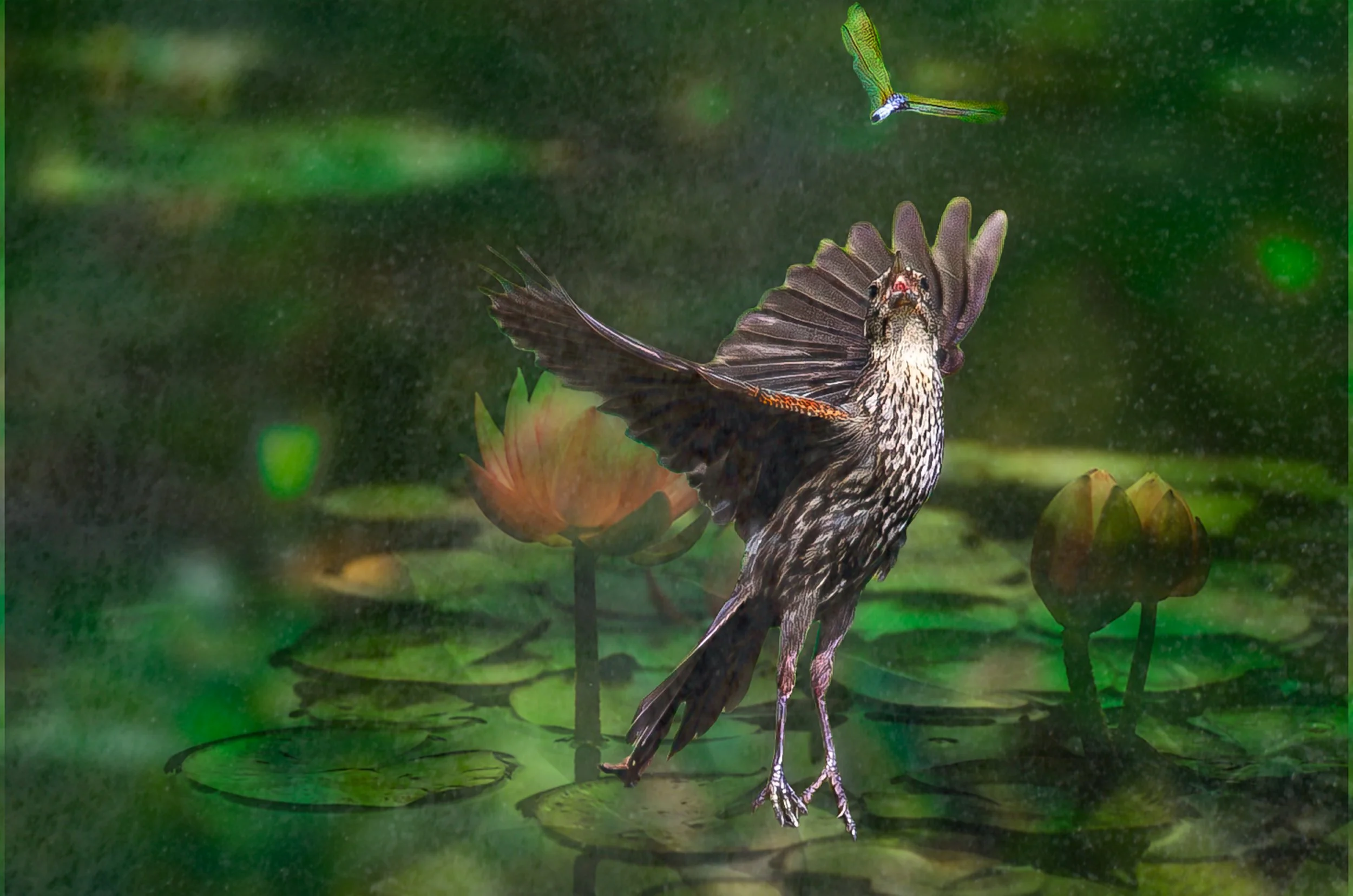
Tammie Birdwell moved to New York a decade ago after a divorce with $250 to her name. She has since learned she is autistic, but she has also learned she can take amazing photos. Sadly, she was tested when she became disabled and unable to walk, but again, she pushed through. She renamed her company Forward Motion Media to help other disabled people see that it is possible to push through that feeling of existential dread and find happiness again. If she can help just one person find their joy again, she will see it as a job well done.
Beachcombers
There is a woman sitting by the water’s edge. She is crying, and the tears are landing on
the sand around her, forming tiny craters in the sand.
“Why are you crying?” A man’s voice she does not recognize interrupts her thoughts.
She did not hear him approach; the sand did a good job absorbing the sound of his weight. She
senses him there, standing behind her, but does not pull her attention away from the coastline.
He places a hand on her shoulder when she does not respond. This, finally, compels her
to look away from the surf.
“I thought I saw a mermaid,” she confesses, “but it was only a porpoise.”
The stranger notices, now, the binoculars around the woman’s neck, the long metal
apparatus resting on its side at her feet, thin and snakelike with a coil of wires running up
towards an oblong handle.
He understands that she is looking for something, is among the many people who flock to
this beach in search of some kind of treasure. The beach is empty at this hour, save for the two of
them. Not even a heron lingering in the tall grasses. Ziploc bags crusted with peanut butter and
ribbons of sunscreen tube labels snuggle into the sand, enjoying the last of the sun’s light, their
original owners halfway down Highway 6, gunning it to the restaurant with the patio seating and
paper tablecloths that their children can scribble on with crayons.
A fishing boat bobs in the gentle undulation of the ocean. “That would be strange,” the
man comments, looking reflexively out onto the water, “as no one has ever proven that mermaids
currently, or have ever, actually existed.”
“I know,” the woman says sadly. “I wanted to be the first to see one.”
The stranger’s eyes flick to the woman’s bare feet, where a layer of chipped fuschia
polish on the nails is visible through the sand where she has buried them.
“I’m worried everyone can smell it on me.” Her eyes shutter half-mast. The wind pushes
her hair — green, like the inside of a shell — into her face. She does not move to brush it away,
appears to be transfixed by a point in the distance, where the sea meets the sky.
The stranger furrows his brow. “Smell what?”
“The stink,” she sighs, turning now to face the man, “of being in love.”
Something in the woman’s eyes sends a chill through the stranger, and recalls to his aging
mind the first time he ever caught a fish.
It was on a boat not entirely dissimilar to the one bobbing in the waves a few yards away.
The brine of salt and the florid stench of live bait twisting on the hook, the grime under his
father’s fingernails as he taught the man, then only just a boy, how to loop it around the needle
point so it dangled long on both sides. “Better. Catch more fish this way. Increases the surface
area. An extra centimeter can be as wide as a mile to a starving man.”
The stranger never understood his father, not even when the thyroid cancer finally killed
him and he left his son everything in his possession. A torn leather cap, a cigar box full of black-
and-white photographs of the women he’d dated as a young man, yellowed paperbacks in a
language that the man never learned to speak.
“What does that make you think of?” The woman’s voice is like a sponge in his ear,
comfortably damp. It surprises him, how familiar the shape of her words feel in his ear canals.
Like locking eyes with a stranger on the train and recognizing a sense of longing reflected back
at you, and needing to quickly look away.
“My mother.” This is a lie; he’s not sure why he says it, even as the words are leaving his
mouth. The woman’s eyes are so dark they’re almost black, like little clamshells pulled from the
reef, or lizards baking, catatonic, atop veined rocks.
He realizes too late that the woman is not, in fact, referring to the old fishing boat, but a
section of the water that’s darker than the rest, as if perhaps shallower or pocked with dense
algae beneath the surface.
“Oh,” he says. “No, it doesn’t.”
The sky darkens, like it can sense the shift in the woman’s composure and bends to blush
alongside her. Someone is burning leaves nearby. The woody scent fills the air slowly, then all at
once, although the man can’t see any smoke billowing in the sky, just stretches of empty beach.
Only then, as the smell of burning brush fills his nostrils and pricks at the back of his
throat does the stranger notice the woman is holding something in her fist. Delicately, he leans a
fraction closer to try and see what it is, but she shifts so to sit atop of her hands, and just like that
his window of chance passes.
“Have you heard of a maenad?” He hears himself saying, eager to push a deeper stake
into their conversation lest she get bored and leave him alone again. The water rushing inward
churns as though to muffle his voice.
She shakes her head. The advancing tide has, by this point, buried her ankles in the sand.
The tip of her metal detector is also burrowed in at the nose. Her strawberry legs appear to him
like freckles, or constellations.
The stranger makes a rounding gesture with his hands in the air like he’s outlining the
world. “Devotees of Bacchus. They wore their hair over their chests like clothing and drank wine
until the stars were close enough to touch. Lived in absolute pleasure. They went mad with it,
truthfully.”
“Can you tell?” the woman interrupts. Her voice is so soft he has to bend down to hear
her.
The man’s nose crinkles and his eyes narrow. He looks just like his father when he’s
confused. “Tell what?”
“He’s just out there, not so far. I’m waiting for him now.”
The man looks at the side of her face until she turns her chin to hold his gaze.
Remarkable, the blue in her eyes. Were they blue before? He searches his mind for the image but
draws a blank. All he can see is the boat rocking on the waves in the Indiana muck, his father
gutting a fish over the green lake, opening the silver skin to show his son the beauty hidden
inside.
He’s even more confused now, which is not entirely unpleasant — a yeasty feeling, like
bread dough rising on the counter.
The stranger’s lips part — he means to ask the woman a question — but close when he
notices an irregular glint of silver pulsing defiantly through the inky black of the water.
“Oh!” The woman rises from the sand, as though she has been waiting patiently in an
armchair at a coffee shop and the barista has just called out her name. When she departs, the
beach keeps the impression of her legs. “This will explain everything.” She doesn’t turn to look
at him again, only walks towards the shoreline.
He takes a seat next to the impression of the woman, which is washed away in two or
three oscillations of the mounting tide. It is becoming so dark. She is up to her knees in the
water, studying an object in her hands. He wants to go to her, see what she has found, but is
afraid that he will spook her, so he waits for her to return to him instead.
He busies himself by watching a gull nosedive into the quick, bobbing for fish like a kid
at the county fair. He can feel the pith of apples in the gap between his front teeth.
The sugar under his untrimmed nails from the funnel cake. The satisfaction of handing the dime over to the
over to the vendor himself. The whipped cream on his nose as he ate voraciously with his hands.
The memory is so potent that he almost doesn’t realize the woman is walking back to him
until he feels the sand shudder with her footsteps.
“What did you find?” he asks. Her eyes are so wide, like his get when he does a lot of
cocaine.
She sets the object in her hand down on the sand between them. Under the sparse light of
the moon, he can see his own reflection, though glassy and smeared, peering back at him.
A thin green bottle, the kind that held beer before aluminum materialized in some lab
somewhere. And inside, an item as thin as a finger, coiled like a spring.
“Who is it from?” the stranger asks, though he suspects he already knows the answer.
“Oh, it is from my love.” She stares longingly at the letter folded into the beer bottle but
does not move to unearth its cork.
“Well, what do you imagine it says?” He is enjoying playing along at this point. He has
nowhere to be, not really. He supposes he was due at his stool at the pub an hour ago, and his
mug of beer was probably growing warm, sweating condensation, wondering where he is to
drink it, but he feels no desire to leave the beach. After all, everyone else had gone by that point.
When was the last time he got to sit in front of the empty expanse and took a moment to search
for porpoises amidst the waves?
“Will you read it for me? I’m very tired, and I don’t think I would be able to focus on the
words if I tried.” She lowers herself slowly to her back, stretching out her arms and legs over the
sand like a starfish. Her eyes fall closed, and as they do, the man notices that her eyelids are
scattered with tiny freckles.
She’s so beautiful, and still, he hesitates. He doesn’t know who this woman is, or what
she might be expecting in the rolled-up letter. She appears to him so fragile, yet somehow
stratified, like a piece of glass smoothed over by the torrent waves. Part of him is afraid of what
might be inside that bottle, because it might turn his attention away from him. For some reason,
he finds himself desperate to know her.
He knows, too, that if he doesn’t pop the cork, he’ll deny her the pleasure of hearing the
words of her lover spoken aloud. He won’t get to see her eyelashes flutter as the words resonate
in her mind, as the sentiments he’ll dictate take shape behind her closed eyes.
Steadying himself with a long inhale of sharp ocean air, the man reaches into the pocket
of his sailing jacket for the swiss army knife he always carries. With little effort, he removes the
cork from the mouth of the bottle with a short, dull blade that he retracts from the tool. It lands
on the damp sand with a hollow thud and rolls towards the encroaching waves. He does not
move to snatch it before it’s pulled away by the surf.
“Okay,” he exhales, finding his voice much quieter than he would like. Why does he feel
as though the breath has been knocked from his lungs? The rowboat jumps in the waves to the
left, revealing a barnacled hull as the water surges up and down around it. The sun is gone, and
the moon is only a sliver, like a splinter of wood in a thumb.
The woman does not stir next to him, but he can sense her breathing, observes from the
corner of his eye the rising and falling of her chest. He clears his throat, pushing away the
phlegm that has built up during his attempt to make the moment of anticipation, in which the
message remains to be read, stretch on as long as possible.
Pinching the paper between his thumb and forefinger as delicately as if the ink were still
drying from the pen tip, he unfurls the small scroll.
The man blinks. He turns the paper over, studies the back for a moment, then turns it over
again to look over the front once again.
It’s blank. There is not even so much as a smear of ink or the ghost of a graphite pencil
marking on either side of the wrinkled paper.
He lifts it to his nose and sniffs it, for no reason other than he does not know what else to
do. It smells like nothing; like the inside of an empty glass bottle.
The tide nudges his bare feet. He looks over to the woman, whose eyes are still closed,
limbs still splayed across the damp beach. She looks so tired, he thinks, and so sad. Why is she
so sad? He doesn’t want her to be sad; he would rather drown himself in the quick, he realizes,
suddenly, then allow her to be sad.
“Okay,” the man says again, though this isn’t necessary. Both of them already know. The
stars blink curiously at the two beachcombers lying under the splintered night but do not speak.
They, too, are curious. “Here is what it says.”
Annelise Richardson is a NYC-based writer with a degree in Creative Writing from the University of Iowa. Her work has been published by Romeing Magazine, Southern Humanities Review, Catharsis Literary Magazine, and more. She is a novelist represented by Ampersand Agency, with her first novel currently on submission and in the process of writing her second.