‘The Heroic Arc of a Fat Kid’
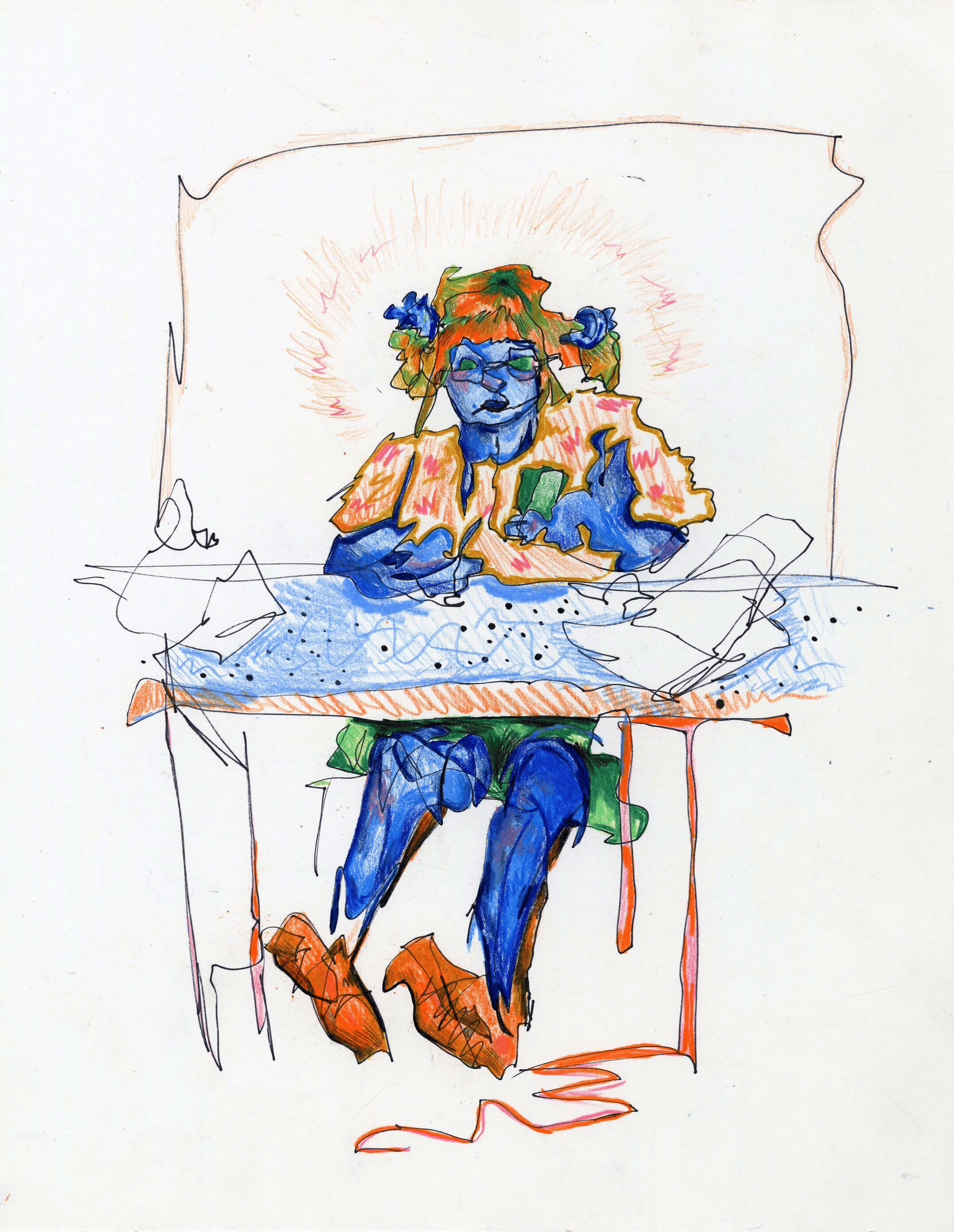
Artist Kiera Fisher
The Heroic Arc of a Fat Kid
Terror is too strong a word. Terror is sharp and sudden, contained within a moment. What I felt was slower, an emotional crescendo that began days in advance and built steadily until it peaked. I use the word fear not because it is perfect, but because I do not have a better one.
I remember the sweat, not rolling but beading in small nervous patches at the back of my neck. This was not life or death, but it pushed me to my limit. I knew I would feel pain in every part of my body. I knew I would have to keep going anyway. Failure was not an option, not because of the gym coach, but because peer pressure and the fear of humiliation would pick up where he left off.
I was ten years old, and that day we had to run the 600-yard dash. I could not walk away, invent an excuse, or convince a pediatrician to write a note. The shame of running slowly while everyone left me behind was one thing. The shame of not being able to run at all was another. That would feed a narrative I had no desire to contribute to, another setup for a joke and a punch line that had followed me my entire life. Kids are funny, or at least funny to everyone except themselves.
People underestimate the heroic arc of being a fat kid. Even ordinary tasks require courage and grit that others never have to summon. For me, the dash was horror. But it could just as easily have been the rope climb, the pull-up challenge, or simply walking into a room where people could observe me from the sides.
Outside gym class, existing in a larger body was its own endurance sport. I lived in a state of magical thinking. I believed that if I sucked in my stomach, no one would notice. I thought oversized clothes could hide me. The real trick I learned was how to be invisible, not just to others but eventually to myself.
I avoided reflective glass in store windows. Photos were worse. They tore down the mental wallpaper I had constructed and forced me to see what the world saw. And the world always had something to say, sometimes casually, sometimes cruelly, sometimes under the guise of concern.
Even when I lost weight, I did not want to talk about it. I wanted people to believe this was who I had always been, that the rest was a misremembered version of me. But I always knew. Even when I regained the weight, denial helped me keep my chin up, but I was never oblivious.
My first weight loss attempt began with over-the-counter diet pills. I was fifteen. The bright packaging promised escape. You did not have to be like this anymore. You could be thin. You could be athletic. You could be popular.
And it worked, for a while. I dropped from 225 to the upper 160s. I felt normal. Until I wasn’t. My old habits returned, and the pounds found their way home. That cycle—lose weight, keep it off briefly, gain it back, hit a breaking point, start again—defined the next thirty years of my life.
Those thinner periods were not wasted. I became more active. I tried new things. One of them was martial arts. It exists on the fringes, where everyone starts at the same level. You do not have to catch up to people who have been athletic their whole lives. You just have to show up. Being overweight made it harder, but I was used to hard.
Eventually, I started running. Slowly at first, jogging around Creve Coeur Lake. By my thirties, I had completed two half marathons and planned a full one. Running gave me more than cardio. Knowing you can run three miles, then six, makes the world feel smaller and more manageable. It brought me peace. Alone on the course, the only thing to engage with was the ground beneath my feet.
Not long after I turned forty, the pain started. My left hip. I assumed it was running-related, but it did not go away. After months of doctors and tests, the diagnosis was arthritis. I was barely forty.
The doctors focused on what now, not why. I wanted answers. They wanted a plan. What I knew was this: I was in the best shape of my life, and I was losing it. Worse, I realized I might never be able to lose weight again. The roller coaster had always had two halves, gain and loss. Now I feared I would be stuck on the first forever.
Chronic pain gives you a kind of pass to be angrier, more impatient. But beneath the pain was grief. I had never stayed thin for long, but those reprieves mattered. They were moments when I felt less self-conscious, more present, more free. And I could see them slipping away.
The weight came back.
I tried to slow it. I found substitutes for running. I returned to martial arts carefully. These hips were not my originals. I had to make them last.
Through hardship, I learned something vital. Sometimes all you can do is what is still possible in the space between what is no longer possible.
My first goal was simple: walk without a limp. Then maybe lose twenty pounds. Not quickly. Time was something I had. After years of pain, I also had patience.
This time, something had to change. I could not go full tilt anymore. The ups were easier, but the downs were harder. I needed a strategy that did not end where all the others had. This had to be the last ride.
I built a long-term approach around structure and sustainability. I had learned that calories matter, but quality matters too. That rhythm mattered. That changing your body without changing your life is a temporary illusion.
My goal was modest: twenty-five pounds. My doctor challenged me to go further. After months of progress, plateaus, frustration, and small victories, I hit a healthy weight. Because I lost it gradually, it felt livable. I was not torturing myself.
Nine years later, I know that pace made the difference. I had to change my lifestyle to change my body and maintain it to keep the change. The greatest myth is believing you can lose the weight and return to your old life. There is no better, only different.
Losing weight is only the first piece. The reward is what you do afterward. What you risk. How you move, eat, think, and speak to yourself. Weight loss gives you tools, but you still have to use them.
Everyone’s journey is different. Even within families, comparison will fail you. Biology offers clues, but most of it is trial and error. Success followed by failure. The skill is staying when every part of you wants to quit.
If you have been overweight your whole life, you remember those early years. You learn to work around it, to build other strengths. Hopefully, you learn compassion. One of the best ways to keep the weight off is to cheer for others on the same road. Not with advice, but with honesty when asked.
Weight loss is not just about the loss. It is about how you live once the weight is gone. When you lose it, you have to live it.
The real transformation is not just physical. It is emotional, philosophical, and practical. It is not about becoming someone else. It is about becoming more of yourself, the version that learned how to endure, adapt, and rise.
Lamont Neal is a poet and essayist whose work has recently appeared in The Bookends Review, Blood + Honey, Spillwords, and Poetry Habitat. His writing is forthcoming in Club Plum (April 2026) and Libre (May 2026). He is the author of the memoirs For Chloe, A Thinner Life, and Hey Nico, Got a Minute?. His creative practice focuses on the intersection of identity, lineage, and renewal. He is currently seeking a home for two completed manuscripts: A Tree in a Storm (creative nonfiction) and Unearth (poetry).
Kiera Fisher is a Columbus based Muralist / Mixed Media Artist who embraces bold colors, and imagery to create art inspired by her surroundings- incorporating lived experiences into her work! She works with a variety of media and materials, including anything from illustration, to textiles, to fine arts. You can find her work @rainbowfish.art on Instagram.
